

In this article
On the busiest night of the week every table was taken, and fourteen chairs still went round the whole service with nobody in them. They appear on no report, because your till counts bills and your book counts tables — and neither of them counts chairs.
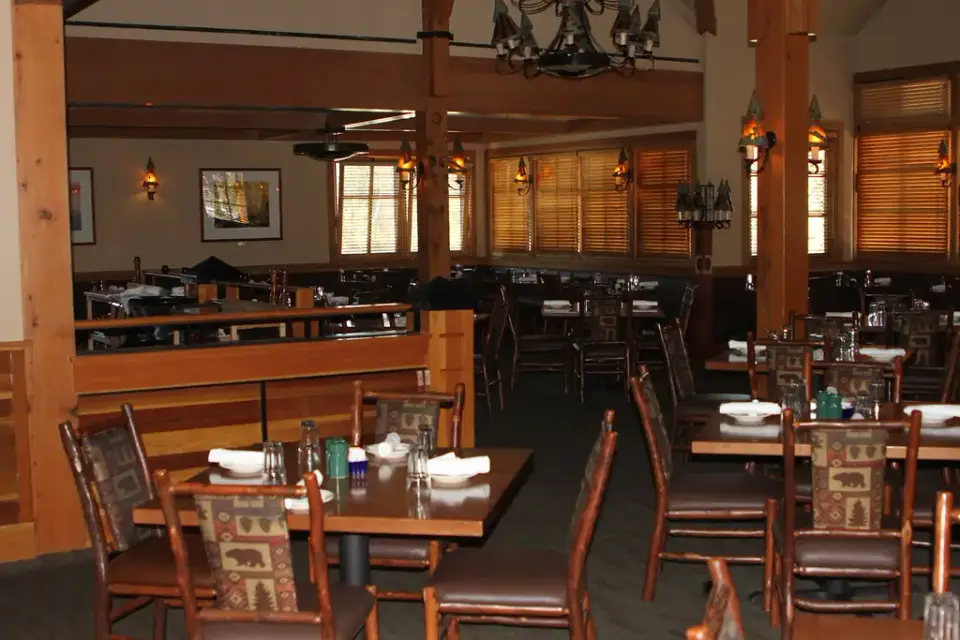
Every dining room was laid out once. Usually not by the person running it now, usually not from any numbers, and almost always around the four-top: it looks right, it is flexible, and two people can sit at it. That last part is exactly the problem — two people can sit at it, and they do, night after night.
Meanwhile the average table in Europe is a couple. More than half of all reservations are for two. In the room above that means a table for four, two guests, and two chairs doing nothing for two hours while still being paid for in your rent, your heating and your cleaning hours.
This guide walks through the seven mistakes that follow from that, with the figures attached, and ends in a calculator. You put in your own tables, the spread of your own bookings and your average spend, and you get three things back: how much of your seating is actually sold, how many guests you turn away on a busy service without knowing it, and what the same room would earn with different table sizes.
Everything runs in your own browser: nothing is sent anywhere and nothing is stored. The model is a simplification of your room, not a simulation of it — it exists to compare two layouts against each other, not to forecast your revenue.
How a full room can be half empty
There are two occupancy figures and they are rarely the same. Table occupancy is the share of your tables that were in use; that is the number your instinct runs on, because a room with every table taken looks full. Seat occupancy is the share of your chairs that had a guest in them. The gap between the two is not a detail: it is the only place the table mix becomes visible.
In a 64-seat room with two two-tops, twelve four-tops and two six-tops — a completely ordinary layout — 77% of the occupied chairs actually had somebody in them on a busy night. The other 23% were chairs at an occupied table with nobody at them: close to fifteen empty seats going round for the whole service. Your room was full. Your chairs were not.
That is also why marketing cannot fix it. More bookings on the same layout will not fill the chairs that stay empty structurally — those are locked to the table size, not to demand. Kimes and Thompson showed it at Chevys in 2004: with the same floor space and nothing changed but the table mix, the restaurant could absorb roughly 30% more customers without waiting times getting any longer. No extra square metre, no extra staff — different tables.
The 7 mistakes, and what each one costs
They are in the order in which they cause each other. The first two are ways of looking, the middle three are choices in your room, and the last two are about what your team does with it on the night.
1. You count tables, but you sell chairs
Ask an owner how busy last night was and the answer comes back in tables: "we were full", "we turned twice". Ask how many chairs were sold and the conversation stops. Yet that is the only figure paying your rent: you pay per square metre, and a square metre carries chairs, not tables.
You can measure the difference in one evening with no software. For every table you seat, write down two numbers: how many chairs are at it and how many guests sit down. Add up both columns at the end. The second divided by the first is your seat occupancy; below 80%, one chair in five spent the whole service waiting for somebody who never came.
Below 75% it is rarely demand that is short and almost always the table size. That is good news: you cannot do much about demand this month, and you can do a great deal about your tables.
2. Your booking list and your dining room do not count the same thing
This is where nearly everyone slips, and it is an arithmetic mistake you never feel. Your book counts bookings. Your room holds guests. Those are two different distributions, and they point in opposite directions.
In the room above six bookings in ten are couples — but couples are only four guests in ten. The other way round, parties of five or more are barely one booking in ten and still more than one guest in five. Lay out your room with the booking list in front of you and you see an ocean of twos and too few big tables; lay it out on the memory of a busy Saturday and you see parties everywhere and put four chairs at everything.
Both pictures are true and both are useless, because they answer different questions. Your tables follow the booking distribution — one booking is one table. Your revenue follows the guest distribution. Below is the same evening, counted twice.
Thirty-eight bookings in a 64-seat room. On the left how they sit in your book, on the right how many guests they put at a table.
Couples are six bookings in ten and four guests in ten. Parties of five or more are one booking in ten and more than one guest in five. So you need both more small tables than your instinct says and more big ones than your booking list suggests — and that is not a contradiction, they are two different questions.
3. A couple at a four-top costs you the whole service, not half of it
A table for four with two people at it feels like half a loss. It is not. Both empty chairs are unsellable for the entire length of that cover — you cannot let them separately, halve them or move them on. And at an average dwell of seventy-five minutes that happens twice at the same table in one evening.
Price a single chair out. Two chairs going round empty on two hundred busy services a year, at two and a half sittings a service and an average spend of 42 euro, is more than forty thousand euro of covers nobody was ever able to order. Not because there was no demand — there were people at the door — but because the chair was bolted to the wrong table.
And then the most uncomfortable finding in this whole article: in a room with too many four-tops, it is the couples you turn away. On the busy service above, nearly four bookings a night do not happen, and all four are twos. The big parties do get in — they have the big tables — while the group that makes up half your book stands at the door.
4. All-small is wrong too: the refusal you never see
The obvious conclusion is: two-tops everywhere, push them together when a group comes. That is the second mistake, and it is dearer than the first, because it is invisible. An empty chair you can see. A party of six that was told on the phone that you were full appears nowhere — that is revenue that never entered your system.
The two mistakes have opposite signs. The smaller your tables, the fewer chairs you waste and the more bookings you have to refuse. The bigger your tables, the more you can take and the more chairs go round empty. The minimum sits somewhere between, and where exactly depends entirely on your own party-size spread — which is why no rule of thumb exists for it, and why there is a calculator at the bottom of this page instead of a table.
Below is the same 64-seat room, laid out six different ways, from nothing but two-tops to almost nothing but six-tops.
Every column seats exactly the same number of people. What changes is the table size — and with it, which of the two mistakes you are making.
32×2 · 0×4 · 0×632 tables
24×2 · 4×4 · 0×628 tables
16×2 · 8×4 · 0×624 tables
6×2 · 10×4 · 2×618 tablesmost revenue
3×2 · 7×4 · 5×615 tables
0×2 · 1×4 · 10×611 tables
On the left you barely waste a chair and the parties stand outside; on the right everyone who fits gets in, but a third of your room goes round empty. Watch what happens at the marked column: from there on, splitting further does remove empty chairs but earns nothing more — the refusals are already gone, and a chair nobody wanted costs nothing. That is exactly why the calculator below never prices empty chairs, only the difference between two layouts.
5. Pushing tables together is not free
"We just push them together" is usually the sentence that ends this whole discussion. Except that pushing tables together costs something nobody counts: time. Two tables can only be joined when both are free, so the first one to clear gets blocked and stands there waiting for the second. That wait is dead inventory — a laid table nobody is allowed to sit at.
Gary Thompson simulated exactly this at Cornell in 2002 and reached a conclusion that cuts against what most dining rooms do: dedicated tables beat combinable ones in most situations, precisely because of that blocking time. Combining pays mainly in a small venue with small parties — there it was worth roughly 2% of RevPASH. In a large room, or with larger parties, it costs more than it earns.
The practical rule falls straight out of that: join tables where it is cheap, not where it is easy. Two tables that stand next to each other and clear at around the same time are a good pair. A table you block at seven for a party arriving at half past eight is ninety minutes of revenue you sold to nobody. The calculator below puts that switch on its own, so you can see what joining costs or earns in your room per year.
6. Big tables are a quarter of your guests and your worst seat-hours
Large parties are a strange product. They fill half a room in one go, so they feel like the best booking of the week. Per seat per hour they almost never are: they stay longer, they order more slowly, and per person they spend less than a couple — fewer aperitifs, shared bottles, one round of coffee. So the same cover earns less and holds the seat for longer.
Thompson surveyed two hundred and sixty-three restaurant workers worldwide in 2011 and 17% admitted actively discouraging parties of six or more. That is not advice — it is the observation that part of the trade already does this arithmetic quietly. And the calculator below does it too: switch joining off and in a tight room revenue sometimes goes up, because those same table-minutes earn more from smaller parties.
The honest answer sits in the middle and it is a question of timing, not of refusing. Put your groups on the first hour of the service or on the late sitting, where the table was not going to turn again anyway. Then their longer dwell costs you nothing — they take the sitting you were not selling — and you keep the peak free for the couples who go through it twice.
7. The best mix is worth nothing without the seating rule
You can lay your room out perfectly and give the gain away the same evening at the host stand. It is seven o'clock, it is quiet, a couple walks in, the four-top by the window is free and it is the nicest spot in the house. They get it. At eight there is a party of four, and the window is taken until half past nine.
Thompson compared nine rules for assigning arriving parties to tables in 2015 and the outcome was unambiguous: tight right-sizing — always the smallest table the party fits at — beats the generous version where guests get a bigger one. Not because the guest loses anything, but because every big table you give away early costs a booking later that you never see.
In the house it is one agreed sentence: the smallest table they fit at, unless the manager says otherwise. And because that feels mean on a quiet Tuesday, it needs a second sentence: if it is after nine and the book is empty, give them the window. The rule applies during the peak, and the peak is exactly where it is worth money.
Run your own room
Fill in what stands in your room, how your bookings are spread and what a guest spends on average. The fields carry the room from this article — 64 seats, heavy on four-tops — so you can see straight away how it reads.
One thing matters: enter one busy service, not an average one. On a quiet night your table mix is irrelevant, because everything fits. The layout only earns money on the nights when demand is bigger than the room, so the services-per-year field should count only those nights.
Table-mix scan
Your own room, your own bookings — and what the same chairs would earn arranged differently.
Your room
One busy service
Money
Seat occupancy
—
—
Refused per service
—
—
What a re-lay is worth
—
—
| Party | Demand | Seated | Joined | Refused |
|---|
—
The model seats parties largest first and always at the smallest table they fit at, and it works in table-minutes: a party of six holds a table longer than a couple. Joining costs a quarter of an hour of dead time on the table that waits. Large parties are given a lower spend per head than a couple. It assumes your guests arrive neatly spread across the service, so the occupancy figures are more optimistic than a real Saturday — use this to compare two layouts, not to forecast revenue. Everything runs in your browser; nothing is sent or stored.
Two things to know when you read it. The money figure is never the price of your empty chairs — a chair nobody wanted costs nothing. It is the difference in revenue between your layout and the best layout with exactly the same number of chairs. So it is not an investment case but a moving case: same space, same rent, different tops.
And when the scan finds several layouts equally good, it picks the one closest to the room you already have. Swapping two four-tops for four two-tops happens next week; a dining room that has to be laid out again from scratch never happens at all.
What to do with it this week, this month and this quarter
Re-laying a dining room on a hunch is an expensive hobby. This order measures first and moves furniture afterwards.
This week — count one evening
- On your busiest service, note two numbers for every table you seat: how many chairs are at it and how many guests sit down. One sheet of paper at the pass will do.
- At the end, divide the second column by the first. That is your seat occupancy, and it is usually the first time anyone in the building has seen the figure.
- Pull the spread of your party sizes over the last three months out of your reservation system — not the average, the whole distribution.
- Put those two things into the scan above and write down what comes out. Change nothing yet.
This month — record what you could not seat
- Keep a notebook by the phone and write down every request you had to refuse, with the date, the time and the number of people. That is the figure that exists in no system.
- Agree the seating rule with your floor: the smallest table they fit at, and the nice spot only after the peak.
- Work out which two tables can genuinely be pushed together and which cannot, and mark it on your floor plan. A pair the floor has to invent costs time exactly when you have none.
- Put your groups deliberately on the first or the last hour of the service instead of in the middle of it.
This quarter — move the tops, not the room
- Add your refused requests to the scan: only with those numbers in it do you know whether you are short of small tables or of big ones.
- Start with the smallest change the scan suggests — swap two tops, not the whole room. Then measure another evening.
- When you buy new tops, choose sizes that match each other, so joining costs a quarter of an hour instead of half of one.
- Put your seat occupancy next to your RevPASH and your table turnover: together those three tell you whether your room is full, turns fast, and is actually being sold.
The cheapest extra table is the one you already own
Extending a dining room costs building work, a permit and usually a year. Re-laying one costs a Saturday morning and a few table tops. The first is considered far more often than the second, because empty chairs at an occupied table do not look like a problem — they look like a busy restaurant.
Almost every owner who runs this finds the same thing: too many four-tops, too few two-tops, and a handful of couples sent back from the door every busy night while chairs stand empty. Swapping two tops usually fixes most of it, and it is the rare intervention in this trade that carries no recurring cost at all.
Then do the same with time. The table mix decides how many chairs you sell, table turnover decides how often, and RevPASH is the figure where the two meet. Work only on demand and never on the room, and you are paying for marketing to fill chairs that do not exist.