

In this article
- Why influencer marketing works for restaurants right now
- The unfair advantage of small and local: the micro-influencer
- Step 1: define your goal and who you want to reach
- Step 2: find the right local creators (and spot the fakes)
- Step 3: make an offer they can't refuse
- Step 4: respect the rules — disclose every collaboration
One honest story from a local food creator often fills more tables than a month of paid ads.
Not because influencers are magic, but because a recommendation from someone you trust works fundamentally differently from an ad trying to convince you. For a restaurant, that's gold: you're not selling a product that gets delivered to people's homes, you're selling an experience they want to have themselves. And nothing sells an experience better than someone who has just lived it. In this guide you'll learn why local micro-influencers are the most underrated marketing channel in hospitality — and then you'll get 7 concrete steps, from finding the right creators to measuring your ROI down to the individual booking.
No vague tips, but an ordered plan: these are the 7 steps that turn followers into bookings. Work through them one by one.
Why influencer marketing works for restaurants right now
We live in a trust economy. Consumers believe less and less in traditional advertising and more and more in people. Research consistently shows that the vast majority of consumers trust recommendations from people — even people they don't know personally — more than brand messaging. For hospitality, that counts double: food is visual, social and emotional. A steaming plate on the screen of a creator you've followed for months feels like a tip from a friend, not a commercial.
On top of that, restaurant choices are local and search-driven. People don't just scroll, they actively search for "where to eat in [your city]" — increasingly straight on Instagram, TikTok and Google Maps rather than on a traditional search engine. When a trusted local account features your place, you show up at exactly the moment someone is making a decision. That's not an interruption of their attention — it's an answer to their question.
And the best part: this channel is within reach of every restaurant, not just those with a marketing budget. A neighbourhood bistro can invite a local creator for dinner today and appear in front of hundreds of potential guests tomorrow. No media agency, no ad budget — just a good dish and a smart approach.
The unfair advantage of small and local: the micro-influencer
The biggest misconception in influencer marketing is believing that more followers is better. For a local restaurant, almost the opposite is true. The value isn't in reach, but in relevance and trust — and those two often decline as an account grows.
Let's lay out the categories clearly:
- Nano-influencers (1,000–10,000 followers): the foodie next door, the local photographer, the parent blogger from your town. Highest engagement, highest trust, virtually free. The most underrated segment for hospitality.
- Micro-influencers (10,000–50,000 followers): serious local food accounts with a loyal, geographically concentrated community. The sweet spot: big enough for real reach, small enough to stay authentic and affordable.
- Macro-influencers (50,000–500,000 followers): regional or national names. Expensive, and their audience is spread across far too large an area to fill your tables.
- Mega-influencers (500,000+): celebrities. Rarely worthwhile for a single location, unless you have a national chain or a launch.
The crucial insight: engagement rate falls as follower count rises. A nano account with 4,000 followers often gets 6 to 10% interaction; a mega account with a million followers sometimes stays under 1%. Combine that with the fact that 80% of a national audience will never drive to your town, and the maths is quickly done: the local creator with 8,000 engaged followers in your catchment area is worth more than the national star with 400,000.
Step 1: define your goal and who you want to reach
Influencer marketing without a goal is just giving away free food. Before you message a single creator, decide what success means. Do you want awareness in a new neighbourhood? To fill a quiet Tuesday evening? To launch a new menu? To promote your brunch to a younger audience? Each goal calls for a different type of creator and a different message.
Tie your goal to a concrete guest profile. A lunch spot that wants office workers looks for different creators than a fine-dining restaurant that wants couples for a special occasion. The sharper your picture of your ideal guest, the easier it is to recognise the right influencer: the creator's audience needs to overlap with the people you want at your tables. If you already work with guest profiles in your reservation system, you know exactly who your best guests are — use that profile as your compass.
Step 2: find the right local creators (and spot the fakes)
Now the real work: finding the right people. Start close to home. The best influencers for your restaurant probably already follow you, or live ten minutes' drive away.
- Search local hashtags and geotags: look at who posts about restaurants in your town (#food[town], #foodie[town]) and who checks in on your neighbours' geotag. Those are active, local food creators.
- See who already tags you: guests who already post about your place spontaneously are your warmest leads. They already love you.
- Ask your staff: your team often knows the local scene better than you do.
Then build a shortlist and screen every account before you invite anyone. Follower counts are easy to buy; engagement is not. Watch for:
- Engagement rate: divide the average number of likes + comments by the follower count. Under 1% is a red flag (possibly bought followers); 3% or more is healthy for a local account.
- Audience geography: a creator with 50,000 followers, most of whom are in another country, is worthless to you. Ask for a screenshot of the audience stats (location, age).
- Authenticity of the comments: scroll through the comments. Real conversations and local names are a good sign; rows of generic emojis and "nice 🔥" from foreign accounts point to fake engagement.
- Consistency and quality: does the creator post regularly and do the visuals fit your image? Their content becomes your shop window.
Better five well-screened local creators than one big name with a questionable audience.
Step 3: make an offer they can't refuse
A restaurant's great asset is that you have something to offer a creator that money can't buy: an experience that fills their content. So you rarely need to put cash on the table. The free-experience model works for most local collaborations.
A strong offer looks like this:
- A real experience, not a favour: invite the creator (and a guest) for a curated dinner that your chef stands behind. Treat them as VIPs. Their experience becomes their content — make it unforgettable.
- Clear, honest agreements: agree in advance on what you expect (for example: one Reel plus three story frames with a tag and geotag, within a week of the visit). Put it in writing, however small the collaboration.
- Creative freedom within a framework: share the core message (your name, your location, the one thing that makes you unique) but let the creator decide how they present it. Their audience spots a script instantly.
- Long-term reciprocity: most of the value isn't in a single post but in a recurring relationship. A creator who posts genuinely about your place three times a year is worth more than ten one-off visitors.
Watch out for the "free meal hunter": someone who only comes for the food and barely publishes anything. That's why you screen in step 2, agree terms in advance, and ideally build a small, fixed roster of creators you trust.
Step 4: respect the rules — disclose every collaboration
This is the step restaurants forget most often, and it can be the costliest. As soon as a creator receives a free dinner or a fee, the post is paid communication and must be recognisable as such. Across the entire EU, the rules on fair commercial practices forbid hidden advertising.
In practice that means: the creator must clearly label the collaboration, for example with #ad, #sponsored or the built-in "paid partnership" tag on Instagram and TikTok. A disclosure hidden among thirty hashtags doesn't count — it has to be up front and legible.
Many restaurant owners fear that such a label breaks credibility. The opposite is true: audiences value transparency, and a correct disclosure protects both you and the creator from reputational damage and fines. So make it a fixed part of your agreement in step 3.
Step 5: turn every guest into a micro-influencer
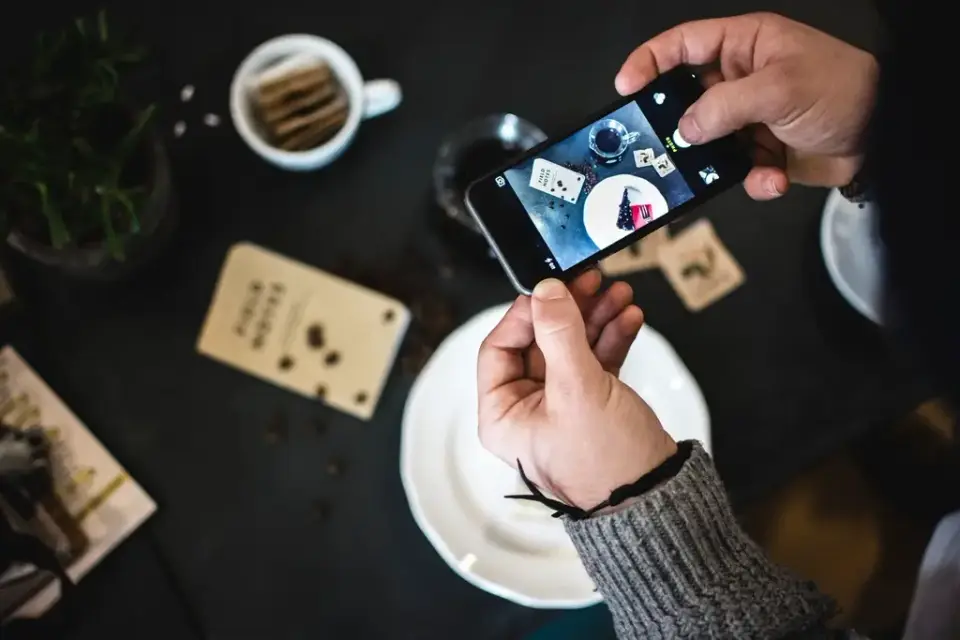
The most powerful influencers for your restaurant aren't on a list — they sit at your tables every evening. Every guest with a smartphone is a potential creator, and their recommendation to their own friends carries even more weight than a stranger's. This is called user-generated content (UGC), and it scales infinitely.
How to encourage it:
- Make your place "instagrammable": one visually strong detail — a mural, a signature dessert, a beautifully lit corner — gives guests a reason to take a photo. Learn how to strengthen your imagery in our guide to food photography for restaurants.
- Make tagging easy: put your Instagram handle and geotag visibly on the menu, the bill and a discreet sign. People tag more often when they know how.
- Just ask: a friendly invitation from the service team ("feel free to tag us, we love sharing the best shots") works surprisingly well.
- Share guest content back: repost the best photos in your own stories (with credit). That rewards the guest, gives you free content, and encourages others to do the same.
UGC seamlessly reinforces your broader social media strategy and feeds the story behind your place — more on that in our guide to restaurant storytelling.
Step 6: repurpose and amplify the content
A common mistake is thinking the work is done as soon as the creator has posted. The post isn't an end point, it's raw material. With the creator's permission, you can extract many times the value from it:
- Repurpose on your own channels: share the Reel in your own feed and stories, put a nice still on your website and in your email newsletter. One production, five placements.
- Amplify the best content with ads: an influencer video that performs well organically is excellent ad material. By putting a small budget behind such an authentic post (whitelisting), you reach exactly your local audience with content that doesn't feel like advertising.
- Combine with your other channels: influencer marketing doesn't stand apart from the rest. The same creators who work on Instagram often shine on TikTok too — see our guide to TikTok for restaurants for how to grow that channel organically.
That way every collaboration becomes a library of authentic visuals instead of a fleeting post that disappears after 24 hours.
Step 7: measure your ROI down to the individual booking
The difference between influencer marketing as a cost and as a growth engine is measurability. "It felt good" is not a result. You want to know how many bookings — and how much revenue — a collaboration delivered. So close the loop from discovery to booking, and make it measurable:
- Unique trackable links: give each creator their own booking link with a UTM tag (e.g. ?utm_source=instagram&utm_campaign=creatorname). In your analytics you'll see exactly how many bookings come from it.
- Personal codes: a code like "ANNA" for a free aperitif is easy to share and to count. Every redeemed code is an attributable booking.
- Ask at the door: the simplest method stays powerful. Recording "how did you find us?" on arrival or in your analytics fills the gaps that digital tracking misses.
- Think in cost per cover: divide your total cost (food cost + any fee) by the number of bookings that came from it. A dinner with 40 euros of food cost that delivers eight bookings costs you 5 euros per booking — a rate no ad platform can match.
A flawless, fast booking flow is crucial here. When a creator post peaks, you get a wave of clicks within a few hours. HappyChef's Social Media & Marketing feature connects your social channels directly to your reservation system, so the path from discovery to confirmed booking is as short as possible. Every extra step between "I want to eat here" and "it's booked" costs you guests.
From a one-off post to a flywheel
The ultimate goal of influencer marketing isn't one viral video — it's a steady stream of new guests who come back. That flywheel emerges when the three pieces lock together: creators attract new people, the experience exceeds their expectations, and those new guests become your next ambassadors themselves (back to step 5). Reinforce that with a strong loyalty programme and active reputation management, and you have a marketing system that feeds itself.
Want to frame it more broadly? Our restaurant marketing tips show how influencer marketing fits into a complete strategy. But start small: this week, invite one local creator you've followed for a while. One sincere recommendation is enough to set the flywheel in motion.
Ready to turn influencer reach into reservations?
HappyChef connects your social channels to your reservation system, so every click from a creator post becomes a confirmed booking as fast as possible.
View Social Media & Marketing →